
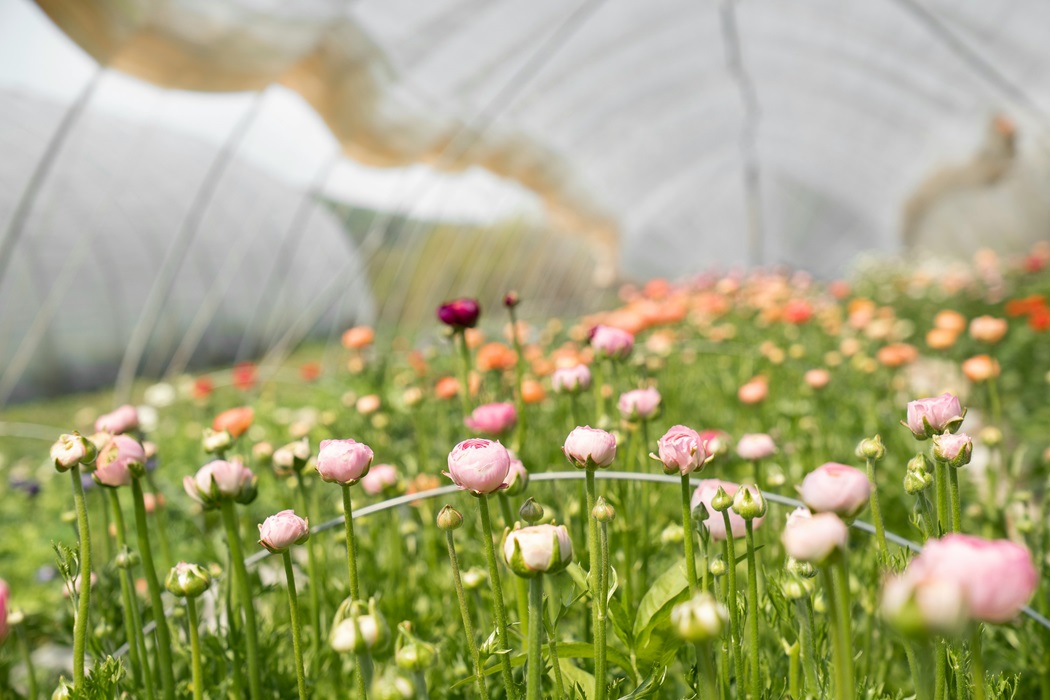
Best SaaS Tools for African Flower Farm Operations
Finding the right software can be hard, so we compared the leading tools for you.
Overview Comparison Table
Tools are listed across the top. Key categories such as ease of use, mining fit and pricing are listed in the first column, so you can compare your options at a glance.
| Category | AgriTask | Rivulis Manna Easy to use; minimal training needed | HORTA (DSS) | CropIn SmartFarm | Pycno |
|---|---|---|---|---|---|
| Ease of use | Intuitive interface; mobile-first | Ideal for irrigated flower farms | Medium ease; requires onboarding | Modern UI; requires setup | Very easy; sensor-based |
| Farming industry fit | Excellent for horticulture and floriculture | Satellite irrigation insights, soil-moisture modelling | Best for greenhouse flower varieties | Strong for export-oriented flower farms | Great for farms adopting IoT/automation |
| Focus & key features | Crop monitoring, scouting, disease models, farm logistics | Scales to regional and multi-farm setups | Disease prediction, fertigation planning, humidity/temperature alerts | Field mapping, traceability, workflow automation | Real-time climate, soil sensors, greenhouse IoT |
| Scalability | Scales from small farms to multi-farm operations | Cloud SaaS | Enterprise-grade horticulture setups | Enterprise scalability | Small to mid-size farms |
| Deployment model | Cloud SaaS | Subscription per hectare | Cloud SaaS + optional integrations | Cloud or hybrid | Cloud + IoT hardware |
| Pricing | Per-hectare or per-user subscription | Subscription + implementation | Subscription | Sensor subscription + device cost |
In-depth Analysis of Each Tool
This section is built from your detailed mining SaaS notes: positioning, strengths, limitations, technical capabilities, African market considerations and pricing. Each card comes directly from the spreadsheet, so you can keep everything consistent by updating only one source.
AgriTask
Positioning: AgriTask is positioned as a full-spectrum digital operations platform built for professional horticulture and floriculture farms. It supports everything from crop planning to scouting, logistics, disease alerts, and compliance reporting. The system is designed to unify agronomy, workflows, and performance monitoring into one coordinated environment. This makes it especially valuable for farms managing multiple varieties, zones, or teams.
Strengths: AgriTask’s modular design allows flower farms to map and digitise every activity without needing custom software. It offers strong analytics, geolocation-based scouting, and configurable dashboards that help managers spot problems early. Farms benefit from improved consistency, reduced paperwork, and smoother communication between teams. It is known for delivering quick wins in operational transparency.
Limitations: The main limitation is that the platform requires proper onboarding and training for staff to use it effectively. Smaller farms may find the system more complex than necessary, and full adoption depends on data discipline. The flexibility can feel overwhelming without clear internal processes. It also performs best when internet coverage is reliable.
Technical capability: AgriTask is a cloud-based platform with offline-capable mobile apps, GIS mapping, powerful API integrations, and configurable workflow engines. It supports automated analysis, disease-risk interpretation, and real-time field updates. Its architecture allows seamless scaling from single farms to multi-country horticultural groups.
African market consideration: This tool fits well with medium and large African flower farms—particularly in Kenya and Ethiopia—where data accuracy, scouting quality, and compliance matter. It addresses problems common in export markets such as inconsistent spray documentation, disease monitoring, and scattered workforce planning. It is well aligned with farms targeting EU and UK regulators.
Detailed pricing: The pricing is typically subscription-based per user or per hectare, with an additional fee for onboarding and process configuration. Enterprise packages may include custom integrations and multi-farm analytics. Discounted pricing is sometimes available for large operational footprints. Pricing information is indicative only. Check the vendor site for current plans, currencies and implementation costs.
Best use cases: excellent for scouting, disease monitoring & workflow coordination
Rivulis Manna
Positioning: Manna is positioned as a satellite-driven irrigation intelligence service aimed at optimising water use in open-field and net-house flower production. It provides daily crop stress signals without requiring hardware installation, which makes adoption extremely quick. Its value lies in converting satellite imagery into actionable irrigation recommendations. This helps farms reduce both water waste and fertiliser inefficiency.
Strengths: Rivulis Manna offers dependable daily insights that help farmers understand plant stress, root-zone conditions, and canopy temperature variations. It significantly improves irrigation scheduling accuracy and detects issues like blocked driplines early. Its simplicity makes it attractive to farms lacking advanced irrigation monitoring. Many users report reductions in both water usage and pumping costs.
Limitations: The system is limited in greenhouse environments where satellite visibility is obstructed, and it does not function as a complete farm management platform. Very small plot sizes may not be captured well depending on satellite resolution. Cloud cover can also reduce imagery clarity on certain days. In-depth analytics may be less customisable compared to enterprise systems.
Technical capability: Technically, Manna uses thermal, multispectral, and NDVI imaging analysed through cloud-based models. It integrates with some irrigation automation systems and supports API exports. The platform provides farm-level and block-level historical trend analysis. No hardware maintenance is required, which is a strong advantage for remote African regions.
African market consideration: Manna is highly suitable for irrigated flower farms in Kenya, Ethiopia, and South Africa where large blocks of roses, carnations, or summer flowers require consistent watering. It works extremely well for farms with water constraints and for regions where IoT hardware is expensive or unreliable. The tool supports both smallholders and large commercial growers.
Detailed pricing: Pricing is typically per hectare per year, with reduced rates for large-scale farms. Enterprise clients may receive multi-site pricing bundles. Because no hardware is needed, upfront costs are very low compared to IoT-based systems. Pricing information is indicative only. Check the vendor site for current plans, currencies and implementation costs.
Best use cases: ideal for irrigation optimisation & early stress detection
HORTA DSS
Positioning: HORTA is positioned as a research-grade decision-support platform built specifically for greenhouse horticulture, including roses, carnations, gypsophila, and similar crops. It is designed to use environmental and climate data to predict disease risks with high accuracy. Farms rely on it to optimise spray schedules and fertigation plans using scientific models. The platform is known for helping growers reduce chemical overuse while maintaining plant health.
Strengths: Strengths include highly accurate disease prediction models, deep integration with climate data, and actionable recommendations for fertigation and humidity control. It helps growers stay within strict pesticide limits for EU markets and reduces costly disease outbreaks. Many farms use it to optimise chemical spending and protect premium flower grades.
Limitations: The main limitation is that HORTA requires a certain level of technical knowledge and consistent climate-sensor data to unlock its capabilities. It is less accessible for farms with limited digital experience. Occasional internet instability can impact performance. Mobile usage is more limited compared to newer SaaS systems.
Technical capability: Technically, HORTA connects to climate sensors, fertigation units, and environmental control systems. It uses advanced algorithms to assess disease pressure and optimal fertigation timing. Its cloud infrastructure supports continuous updates and scientific model improvements. Greenhouse compatibility is its biggest strength.
African market consideration: HORTA is ideal for high-value greenhouse and polyhouse flower production in Kenya, Ethiopia, and Zimbabwe. It is especially useful for exporters whose buyers demand consistent quality and strict adherence to residue requirements. Farms with advanced climate-control setups receive the highest benefit.
Detailed pricing: Prices include an annual subscription, initial onboarding, and optional integrations with climate or fertigation systems. Larger greenhouse estates may receive scaled pricing. Technical support tiers are available for complex operations. Pricing information is indicative only. Check the vendor site for current plans, currencies and implementation costs.
Best use cases: best for greenhouse disease control & fertigation planning
CropIn SmartFarm
Positioning: SmartFarm is positioned as a full enterprise farm ERP for horticultural exporters managing large workforce groups and multiple production sites. It supports end-to-end traceability, packhouse workflows, compliance, and audit readiness. Companies choose it to standardise documentation across operations. It is widely used in agriculture supply chains requiring strong visibility.
Strengths: Strengths include powerful traceability systems, robust audit workflows (GAP, MPS, KFC, Fairtrade), workforce management tools, and support for large operational teams. It integrates packhouse processes and consolidates data streams into a central dashboard. The system is very strong for meeting high-level compliance requirements.
Limitations: Limitations include long setup times, higher pricing tiers, and the need for well-trained staff. Internet connectivity is important for full functionality. Smaller farms may find modules unnecessary. Custom workflows may require support from CropIn’s implementation team.
Technical capability: Technically, SmartFarm includes offline mobile apps, API integrations, packhouse connectors, documentation engines, and real-time productivity dashboards. It functions as an operational backbone for large growers. Data security and enterprise scalability are major strengths.
African market consideration: SmartFarm fits large African flower exporters supplying EU/UK markets where traceability, certification, HR coordination, and multi-site oversight matter. It is ideal for companies with complex packhouse operations and labour structures.
Detailed pricing: The system is priced annually with user tiers and additional modules for traceability, packhouse, and audit automation. Enterprise customisation may incur extra charges. Pricing information is indicative only. Check the vendor site for current plans, currencies and implementation costs.
Best use cases: strong for export compliance & workforce supervision
Pycno
Positioning: Pycno is positioned as a simple, practical IoT climate monitoring solution for greenhouses and open fields. It provides real-time temperature, humidity, VPD, and soil data using small plug-and-play sensors. Farms adopt it to stabilise greenhouse conditions and prevent climate-driven disease outbreaks. It is a cost-effective way to gain visibility without complex infrastructure.
Strengths: Strengths include effortless installation, highly reliable readings, and mobile alerts when conditions become risky. It supports early detection of disease-promoting humidity spikes and helps farms optimise watering intervals. Sensors can be moved between zones depending on crop stage.
Limitations: Data limitations arise from battery or solar power dependency, and sensors need periodic calibration. It is not a full management tool and works best when paired with another SaaS platform. Connectivity may be challenging in remote areas without proper gateways.
Technical capability: Pycno uses wireless IoT nodes, cloud analytics dashboards, and API connections for greenhouse automation. It supports granular, minute-level climate data streaming. The system is hardware-based, which simplifies understanding for growers.
African market consideration: Pycno is an excellent fit for African greenhouse flower producers seeking climate stability and problem alerts. It is especially suited for Naivasha, Ethiopia’s highlands, and South African net-house production. It benefits both small and large operations.
Detailed pricing: Pricing includes hardware purchases plus a recurring monthly subscription per sensor or gateway. Multi-unit packages reduce total cost. Pricing information is indicative only. Check the vendor site for current plans, currencies and implementation costs.
Best use cases: perfect for greenhouse climate stability & early humidity alerts
Frequently Asked Questions
These FAQs are taken from your spreadsheet and can be updated any time. They also work as a light conclusion for the post, addressing the most common concerns for mining stakeholders in Africa.
| Question | Answer |
|---|---|
| Which SaaS tool should a flower farm start with? | Begin with the farm’s biggest bottleneck: irrigation accuracy → choose Rivulis Manna; disease control → choose HORTA; full digitalisation → choose AgriTask or CropIn. |
| Are these tools suitable for remote rural areas? | Yes — most tools operate offline with automatic sync once internet returns. |
| Do these tools help with export documentation? | CropIn SmartFarm is the strongest here, offering full traceability and compliance workflows for EU/UK markets. |
| What improves yield most quickly? | Sensor-based climate alerts (Pycno) and precision irrigation (Manna) typically show the fastest ROI. |
| Will AI replace farm managers? | No — AI supports decision-making, but skilled managers are still essential to interpret data and manage greenhouse conditions. |